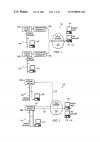
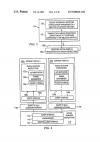
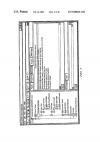
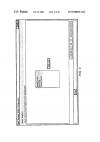
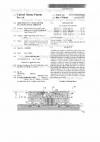
Managing a virtual private network includes receiving information describing at least one virtual private network attribute from multiple computers providing at least one virtual private network function, preparing a report by organizing the received information into a table that lists each of the multiple computers and the corresponding virtual private network attribute received from each of the multiple computers, and displaying the prepared report to a user.
REFERENCE TO RELATED APPLICATIONS
This application relates to the following U.S. patent applications: U.S. Ser. No. 09/285,133, entitled “Bulk Configuring a Virtual Private Network”, filed Apr. 2, 1999; U.S. Ser. No. 09/285,558, entitled “Links for Configuring a Virtual Private Network”, filed Apr. 2, 1999; and U.S. Ser. No. 09/285,424, entitled “Managing a Virtual Private Network”, field Apr. 2, 1999.
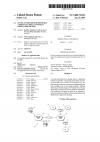
A method for managing packet voice networks conforming to ITU Recommendation H.323, using a virtual entity approach and abstract information model approach, is disclosed. A virtual zone object represents an association of a virtual gateway, which comprises an H.323 gateway and a signaling controller, and one or more associated virtual gatekeepers, each of which comprises an H.323 gatekeeper, or the combination of an H.323 gatekeeper and a route server. User input specifies a configuration operation on the virtual zone and one or more parameter values. One or more configuration instructions are automatically issued to both the gateway and the gatekeeper, and other involved objects representing other involved network elements, resulting in configuring both the gateway and the gatekeeper as specified in the user input. As a result, a user can configure or operate on a virtual zone or other virtual object as an atomic entity, for example, in a network management application, without involvement in complicated details of the actual network devices that provide a particular packet voice service.
A method of determining a communications path in a computer network, the method including sending a simulated network message within a model of the computer network from a source device component within the model to a destination device component within the model along a device component path, where the message does not traverse the computer network, and recording the device components traversed by the message, thereby determining the communications path.
A system and method for implementing an integrated information system are provided. A premises server is in communication with a variety of information sources that produce monitoring data for a premises. The premises server collects, presents, and transmits the monitoring device data to a central server capable of processing data from multiple premises servers. The central server receives the data and traverses one or more logical rule sets to determine whether the inputted data violates the rules. Based on an evaluation of the rules, the central server generates outputs in the form of communication to one or more authorized users via a variety of communication mediums and devices and/or the instigation of a variety of acts corresponding to the evaluation of the rules.
A system and method for evaluating data in a monitoring network are provided. A processing server obtains monitoring device data from a number of monitoring devices. The processing server processes and stores the monitoring device data according to one or more unique identifiers. Utilizing decision logic, the processing server evaluates the monitoring device data to generate one or more predictive assessments. Each predictive assessment can result in the initiation of actions or notification of authorized personnel based upon the likelihood of a target event occurring.