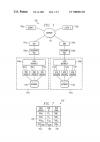
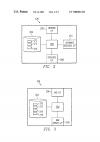
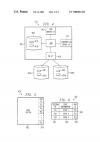
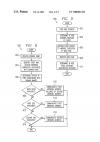
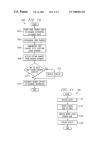
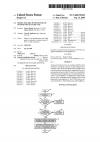
A method for multi-site clustering in a network includes receiving a domain name from a client at a first domain name server, and identifying a first network address and a second network address associated with the domain name. The first network address is associated with a first site that includes a load balancer coupled to a plurality of web servers, and the second network address is associated with a second site that includes a second domain name server. The method also includes determining whether the first site is available to serve the client, and determining whether the second site is available to serve the client. The method further includes communicating the first network address followed by the second network address to the client based at least partially on a determination that the first site and the second site are available, and communicating the second network address to the client based at least partially on a determination that the first site is not available.
The invention discloses a centralized computer system, i.e., so-called blade PC system. The centralized computer system according to the invention includes a plurality of centralized and bladed hosts and a plurality of I/O peripherals. In particularly, the centralized computer system according to the invention is capable of automatically detecting a current status of each host and/or each set of I/O peripherals.
A client device establishes a virtual private network connection with a central site or network through a master concentrator. The master concentrator transmits state information, relating to the virtual private network connection, to a backup concentrator. In the event the master concentrator fails during a communications session between the client device and the network, the backup concentrator maintains the communication session between the client device and the network over the virtual private network connection using the connection state information received from the master concentrator. Such a configuration allows for failover of a virtual private network connection from the master concentrator to the backup concentrator without requiring the client device to re-establish the virtual private network connection with the central site or network. The configuration also allows the client device to maintain an existing communications session with the network.
A database server storing an authorization module and a rerouting module. The authorization module may be configured to define a second network interface module authorized to relay a response message queued in a hold queue associated with a first network interface module, where the response message is generated in response to a first request message. The rerouting module may be configured to route the response message from the hold queue to the second network interface module in response to a second request message requesting messages queued in the hold queue. The present invention thus enables delivery of requested queued messages despite failure of the request for such messages to correspond to the queue in which the messages are contained.
The present invention relates to an enhanced DNS resolver architecture configured to operate in high availability environments, such as the Internet. Specifically, the DNS resolver code of the present invention may be implemented by a storage operating system in a filer. The resolver code modifies a conventional resolver algorithm so as to reduce the time necessary to map IP addresses to alphanumeric domain names and vice versa. Advantageously, the enhanced resolver code keeps track of non-responsive or “dead” DNS servers as well as non-resolvable or “bad” domain names and IP addresses.